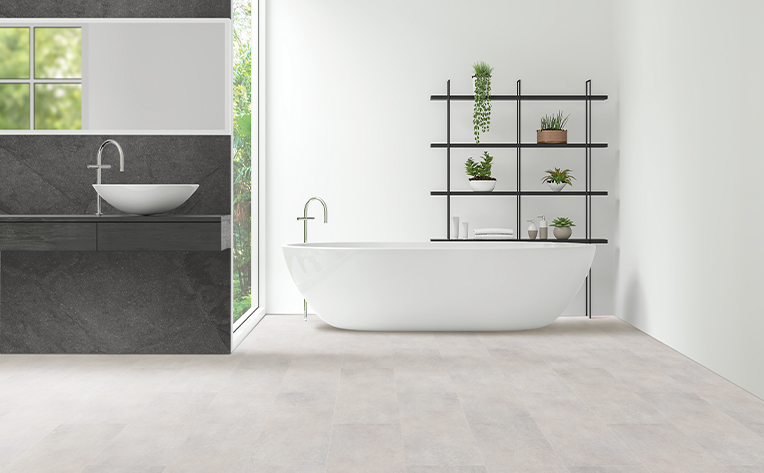
Waterproof and water-resistant are not the same thing, and choosing the wrong category for a high-moisture room is one of the most common flooring mistakes homeowners make. The distinction comes down to how long a floor can be exposed to moisture before damage occurs.
Waterproof flooring can handle standing water, flooding, and prolonged moisture exposure without damage to the core. SPC vinyl, tile, and luxury vinyl plank are the most common examples.
Water-resistant flooring handles everyday spills only if wiped up promptly. Most laminate and some vinyl falls into this category. Left wet, it swells and buckles.
The label on a product is not always the full story. Even waterproof planks can allow moisture to reach the subfloor through seams if installation is not done correctly. Waterproof means the plank itself won’t be damaged, not that the whole floor system is sealed.
For bathrooms, kitchens, and basements, choose waterproof. For bedrooms, living rooms, and low-moisture spaces, water-resistant flooring is often sufficient and less expensive.
When it comes to selecting the right flooring for your home, it's crucial to understand the distinction between waterproof and water-resistant options. Whether your floors are exposed to outdoor rain or indoor spills, your selection of waterproof materials has the power to influence the durability and lifespan of your floors.
Waterproof flooring is designed to withstand not only minor liquid spills but also more substantial accidents like floods, offering a layer of protection and peace of mind for homeowners. On the other hand, flooring made with water-resistant material is only meant to handle small spills as long as they are promptly attended to, but it has its limitations when it comes to resistance to extended moisture exposure.
Here's how the two categories compare:
Waterproof Flooring: Waterproof floors are highly durable and can handle liquid spills, standing water, and most moisture-related accidents without damage to the plank itself. That said, prolonged or severe flooding can still cause damage over time. Waterproof means the core material resists moisture, not that the floor is immune to every possible water event.
Water-Resistant Flooring: Water-resistant flooring is designed to handle minor spills when promptly addressed.
In practice, waterproof flooring is the right choice anywhere moisture is a regular factor: bathrooms, kitchens, laundry rooms, basements, and mudrooms. Water-resistant flooring works well in lower-risk spaces like bedrooms, living rooms, and home offices, where spills happen occasionally and can be cleaned up right away.
Vinyl and laminate flooring share similarities in surface appearance, making them easily confused. However, they differ significantly when it comes to their ability to resist water damage.
Vinyl Flooring: Vinyl floors are water-resistant, with many options, including luxury vinyl and luxury vinyl plank, available in fully waterproof versions. This makes them a strong choice for areas prone to moisture exposure.
Laminate Flooring: Laminate flooring offers water resistance that can handle small spills and everyday wear and tear. While most laminate is water-resistant and susceptible to buckling from prolonged exposure, waterproof laminate options are also available for added protection in higher-moisture spaces.
If you want hardwood in a moisture-prone space, engineered hardwood is the more practical choice over solid hardwood. Its layered construction makes it more stable and better equipped to handle humidity and the occasional spill. That said, it is still not waterproof and can sustain damage if left wet for too long. For kitchens, entryways, and other higher-moisture areas, engineered hardwood offers a real wood look with more durability where it counts.
SPC, or Stone Plastic Composite, is a type of rigid core vinyl flooring built with a dense layer of limestone and stabilizers. That rigid core is what makes it one of the most waterproof flooring options available, highly resistant to water penetration and an excellent choice for moisture-prone spaces like bathrooms, kitchens, and basements.
Keep in mind that even though this flooring is highly waterproof, proper installation and maintenance are still crucial to ensuring long-lasting performance. While no flooring material is truly 100% waterproof, some, like SPC (Stone Plastic Composite) vinyl, come close to achieving this level of water resistance.
Tile is the most waterproof flooring option available. Luxury vinyl is a close second, with high resistance to water penetration and an excellent choice for moisture-prone areas like bathrooms, kitchens, and basements.
While no installed floor system is completely immune to water, tile comes the closest with a non-porous surface that will not absorb moisture. Water can still seep through grout lines if not sealed correctly, so proper installation matters. For non-tile options, we carry flooring products like vinyl and laminate rated as waterproof, giving you strong protection in any moisture-prone space.
For areas prone to moisture, tile and vinyl are the more reliable choices. Both are strong performers in kitchens, bathrooms, and basements.
Most laminate flooring is water-resistant, not waterproof, because its wood-composite core can swell with prolonged water exposure. We offer waterproof laminate options for those who want the look of laminate with added protection against moisture.
Yes, vinyl flooring, including luxury vinyl plank (LVP) and tile (LVT), comes in waterproof options, with a synthetic core that doesn’t absorb moisture. Proper installation is still necessary to prevent water from seeping through the seams to the subfloor.
Tile and luxury vinyl are the top choices for bathrooms. Tile is extremely moisture-resistant and durable. Luxury vinyl offers a soft, comfortable surface underfoot while offering water-resistance.
Tile is the most practical waterproof choice for kitchens. Luxury vinyl plank and luxury vinyl tile are another great option.
Choosing the right flooring for your home is a big decision, and you don't have to make it alone. Whether you need something that can handle a busy kitchen, a moisture-prone basement, or just the everyday chaos of a well-lived in home, our friendly flooring professionals are here to help you find a waterproof or water-resistant option that fits your space and your life.
When you're ready to take the next step, schedule a free estimate and let our local flooring experts come to you. We'll measure your space, walk you through your options, and help you find a floor you'll love for years to come.
Schedule an Estimate